Falls remain one of the leading causes of injuries and fatalities in construction. A properly used personal fall arrest system can mean the difference between a scare and a tragedy.
What is a Personal Fall Arrest System (PFAS)?
A PFAS is designed to stop a worker’s fall before they hit a lower level. In construction, it typically includes:
- Full-body harness – worn correctly to spread fall forces over your thighs, pelvis, chest, and shoulders.
- Lanyard or self-retracting lifeline (SRL) – connects your harness to an anchor point.
- Anchor point – a secure point capable of supporting at least 5,000lbs of downward force per worker.
When PFAS is Required
- When working 6 feet or more above a lower level where there are no guardrails or parapet wall at least 39-45 inches tall.
- Examples: roofs, scaffolds, aerial lifts, on top of units, on top of piping, on top of ductwork, and even ladders in some situations.
Inspecting Fall Protection Equipment
Fall protection is only as good as its condition. Before each use, the user must inspect their fall protection equipment.
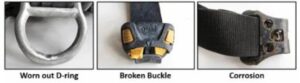
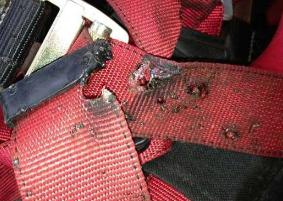
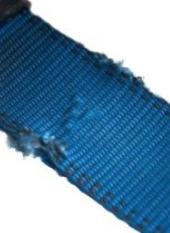
- Harness: look for frayed straps, cuts, burns, broken stitching, hardware damage, and a secure D-ring.
- Lanyard/SRL: Check for frays, kinks, rust, broken springs, or missing labels.
- Anchors: Verify they are rated, secure, not damaged or loose, and capable of withstanding 5,000 lbs of downward force.
- Tags & Labels: make sure they are legible – if missing, the equipment should be removed from service.
If you find any fall protection equipment with damage, it must be tagged out immediately and taken out of service.
Proper Use
- Fit harness snugly – chest strap at mid-chest, leg straps secure but not cutting off circulation, D-ring between your shoulder blades.
- Attach to the D-ring between your shoulder blades – never to a belt loop or front of harness unless specifically approved for positioning work.
- Limit free fall distance to 6 feet or less – adjust your lanyard/anchor setup accordingly.
- Avoid swing hazards – anchor above you whenever possible.
- Do not tie off to unapproved structures like conduit, railings, or light-duty supports.
If you see someone working without fall protection when it would be required, speak up. If you’re unsure how to use the system – ask your foreman or the safety department before starting work. Your life is worth more than a few minutes of setup.
Here are some examples of what to look for when inspecting fall protection equipment.
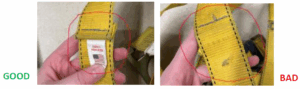
Impact Indicators (pictures below) tell you if someone has fallen while wearing the harness you are inspecting. Every harness will have 2 impact indicators, located behind your shoulder blades while wearing the harness. Impact indicators are supposed to look like the picture on the left with a sewn piece of folded webbing. If someone were to fall while wearing that harness, the impact indicator would snap open and look like the picture on the right. If an impact indicator is snapped open, the harness must not be used and taken out of service just like all equipment that was used during a fall.
Stay Safe!